Fitness During Perimenopause
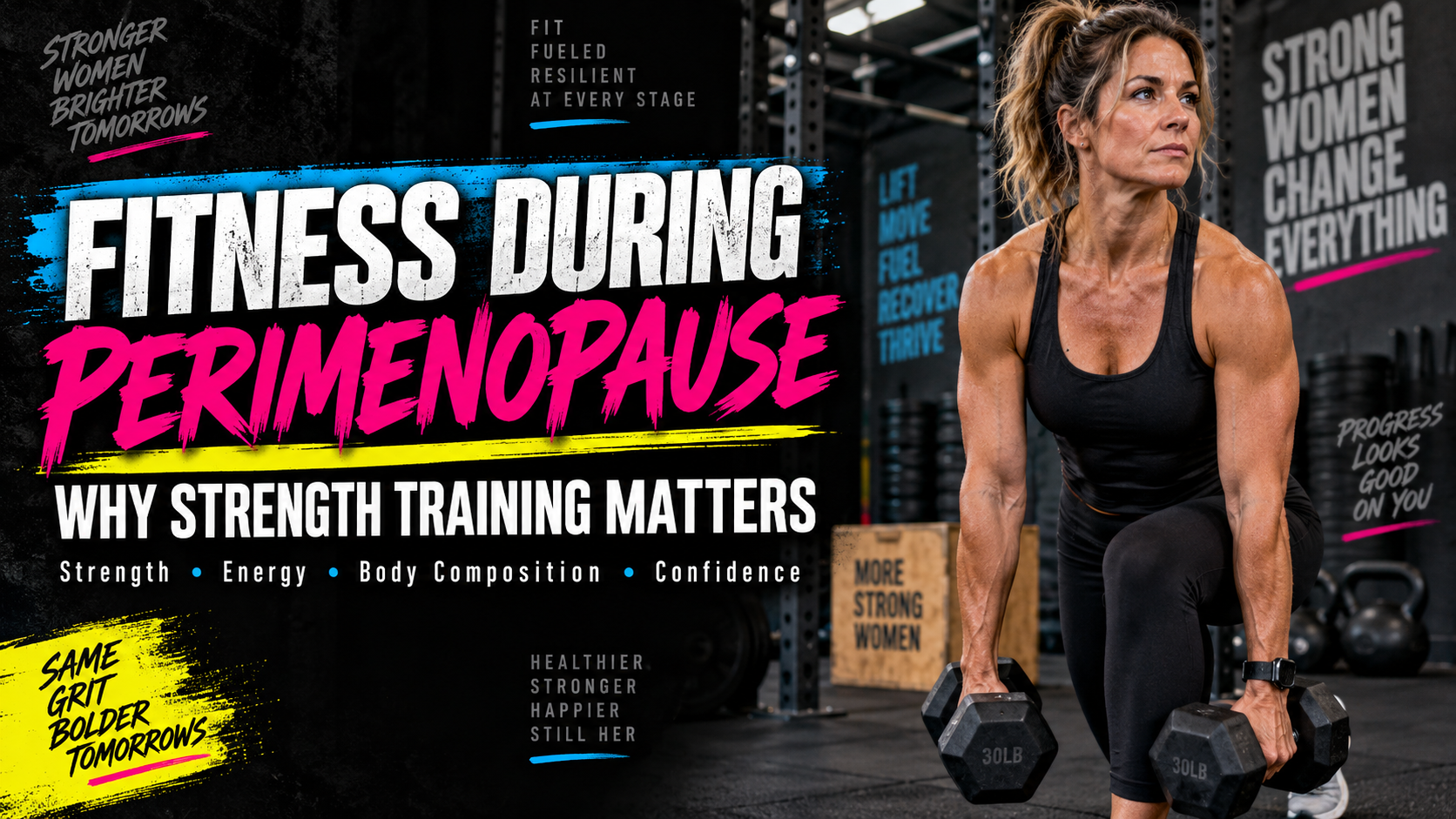
Perimenopause can change how your body feels, recovers, and responds to exercise. Learn why strength training, cardio, recovery, and body-composition tracking can help you stay strong and capable through midlife.
Maybe your workouts suddenly feel different. You are not recovering quite as quickly. Your sleep is unpredictable. Your body composition seems to be changing even though your routine has not changed much.
Some days you feel strong. Other days you are wondering who replaced your body overnight.
Fitness during perimenopause deserves a better conversation. Perimenopause is the natural transition leading up to menopause, and it can bring changes in menstrual cycles, sleep, energy, and body composition. That does not mean it is time to stop training. In fact, this can be one of the most important times to make strength and fitness a priority.
Your quick takeaways
- Strength matters. Resistance training can help support muscle, strength, bone health, mobility, and everyday function.
- Recovery matters too. Sleep, stress, soreness, and changing symptoms can affect how a workout feels from one day to the next.
- The scale is only one number. Strength, energy, body fat, skeletal muscle, performance, and how you feel all belong in the progress conversation.
01 / What changes
What happens during perimenopause?
Perimenopause is the transition before menopause, when hormone levels begin changing and menstrual cycles may become less predictable. Common experiences can include changes in menstrual cycles, hot flashes, night sweats, and sleep problems. Every woman experiences this transition differently.
Your body composition may change too
Research following women through the menopausal transition has found changes in body composition, including increases in fat mass, reductions in lean mass, and changes in where body fat is stored. That is one reason body weight alone does not tell the full story.
Better questions include: Are you maintaining muscle? Are you getting stronger? How is your energy? How are your workouts feeling? Is your body composition changing?
Why strength training matters
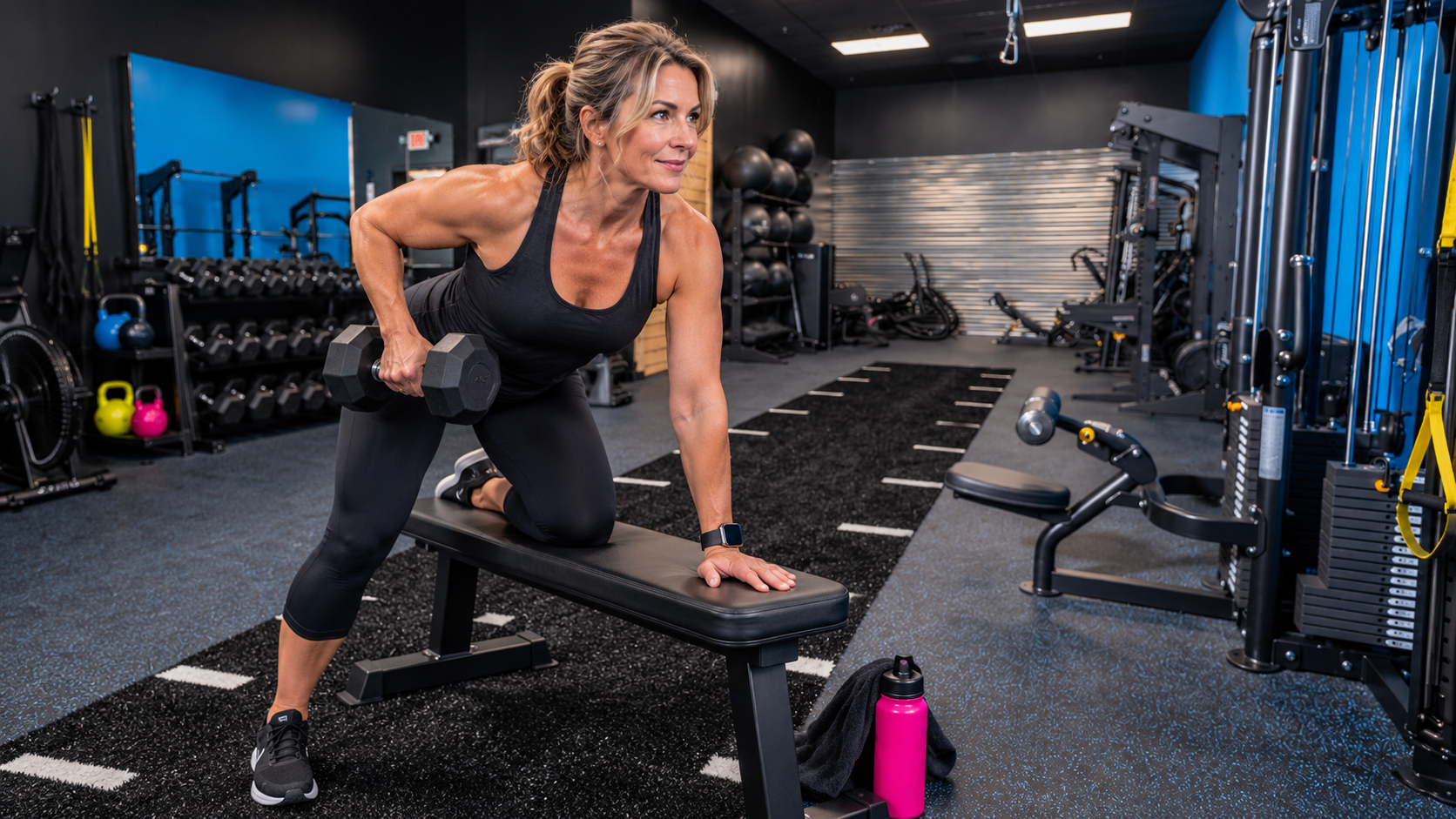
Strength training challenges your muscles to adapt. It can include dumbbells, barbells, machines, resistance bands, kettlebells, and body-weight movements.
Current U.S. physical-activity guidance recommends muscle-strengthening activity on at least two days each week. Resistance training is also supported by research showing improvements in strength among postmenopausal women, with evidence that it can benefit bone mineral density.
We are not only training for how we want to look this year. We are training for how we want to move 10, 20, and 30 years from now.
More is not always better. Better is better.
02 / Train smarter
Do not make fitness only about burning calories
For years, women were handed a pretty simple formula: eat less, do more cardio, burn more calories. That is not the whole picture.
Cardio matters. So do strength, muscle, mobility, and recovery. Current guidance recommends both aerobic activity and muscle-strengthening exercise. They are teammates, not competitors.
A practical midlife training plan
- Strength train. Use major movement patterns such as squats, hinges, rows, presses, lunges, carries, and core work, modified for your ability level.
- Include cardio. Walking, FitCamp, cycling, swimming, and other aerobic activity can support heart health and endurance.
- Train for real life. Functional movement should help you carry, climb stairs, balance, get up, and move confidently.
- Respect recovery. Pay attention to sleep, stress, soreness, nutrition, hydration, and how your body is responding.
- Progress gradually. Improvement can mean more resistance, better form, more repetitions, better endurance, or simply greater consistency.
Sleep can affect the whole picture
Sleep problems are common during perimenopause, especially when hot flashes or night sweats enter the mix. Poor sleep can affect energy, motivation, recovery, and workout performance. One rough night does not automatically cancel your workout, but context matters. Smart training can adjust intensity without abandoning consistency.
Stop letting the scale grade your progress
If your weight barely changes but you gain muscle, reduce body fat, become stronger, improve your energy, or notice your clothes fitting differently, that is still progress.
At Outlaw FitCamp, InBody testing can help track body composition, including skeletal muscle mass and body fat, so the conversation becomes less about “What do I weigh?” and more about “How is my body changing?”
03 / Your next step
You do not need an entirely new species of workout after 40
Despite social media’s determination to make midlife fitness impossibly complicated, the fundamentals still work: strength train, move regularly, include cardio, recover, eat appropriately, and be consistent.
What may change is how intentional you need to be about those fundamentals. Your symptoms, recovery, fitness level, health history, and goals can all influence what the right program looks like for you.
If you are just getting started
You do not need to already be fit before beginning. Start at your current level. That may mean two workouts per week, Personal Training, learning proper movement patterns, walking more, or gradually adding resistance. Some activity is better than none, and you can build from there.
How Outlaw FitCamp can help
At Outlaw FitCamp, we meet you where you are. We look at your goals, fitness level, abilities, and starting point and help you build forward with Personal Training, 30-minute FitCamp workouts, InBody body-composition testing, progress tracking, and accountability.
Perimenopause does not have to mean backing away from fitness. It can be an opportunity to shift the question from “How small can I make myself?” to “How strong can I become?”
Build muscle. Protect your strength. Improve your fitness. Pay attention to recovery. Measure more than body weight. Train for the life you want to be living years from now.
Start with an assessment and let us help you Make Fit Happen.
This article is for general educational purposes and is not medical advice. Perimenopause symptoms and individual health needs vary. Talk with your physician or another qualified healthcare professional about symptoms, hormone therapy, medical conditions, or concerns that may affect your exercise program.
A little more clarity
Common questions
Do I need to completely change my workouts during perimenopause?
Usually not. Strength training, cardiovascular activity, daily movement, recovery, and consistency still matter. You may benefit from adjusting intensity, frequency, or exercise selection based on symptoms, sleep, recovery, and your individual health needs.
What about hormone therapy?
Hormone therapy is a medical treatment and should be discussed with a qualified healthcare professional. Exercise can be an important part of a healthy lifestyle during perimenopause, but it does not replace appropriate medical care.
Sources & further reading
- American College of Obstetricians and Gynecologists: The Menopause Years
- ACOG: Sleep Health and Disorders
- CDC: Physical Activity Guidelines for Adults
- SWAN Study: Changes in Body Composition and Weight During the Menopause Transition
- Resistance Training Effects on Healthy Postmenopausal Women: Systematic Review and Meta-analysis
- Resistance Training and Bone Mineral Density in Postmenopausal Women: Systematic Review and Meta-analysis
Reviewed against current source pages September 2026.
Your next chapter
Let’s Make
Fit Happen.
Bring your goals. We’ll bring the coaching, encouragement, and accountability to help you get stronger at every stage.